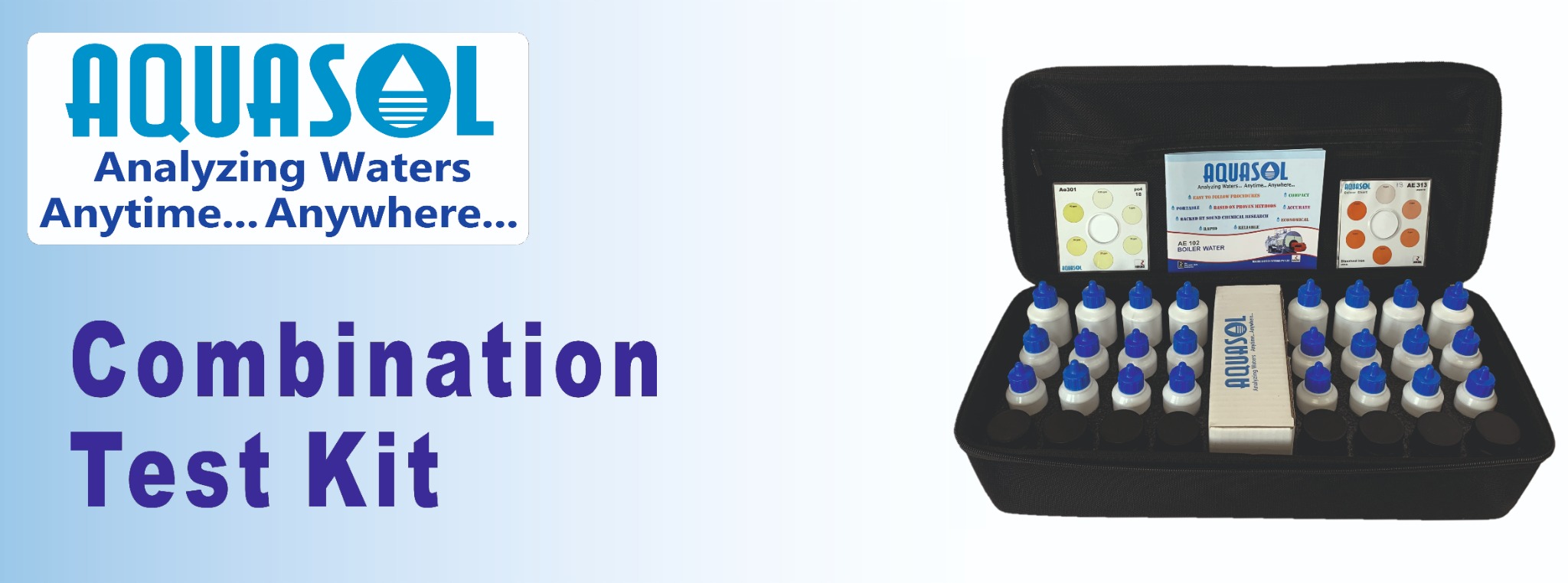
Fast, practical water testing where decisions are made.
Aquasol portable water test kits help plant operators, engineers, laboratories, field teams and quality professionals monitor important chemical parameters without waiting for complex laboratory infrastructure.
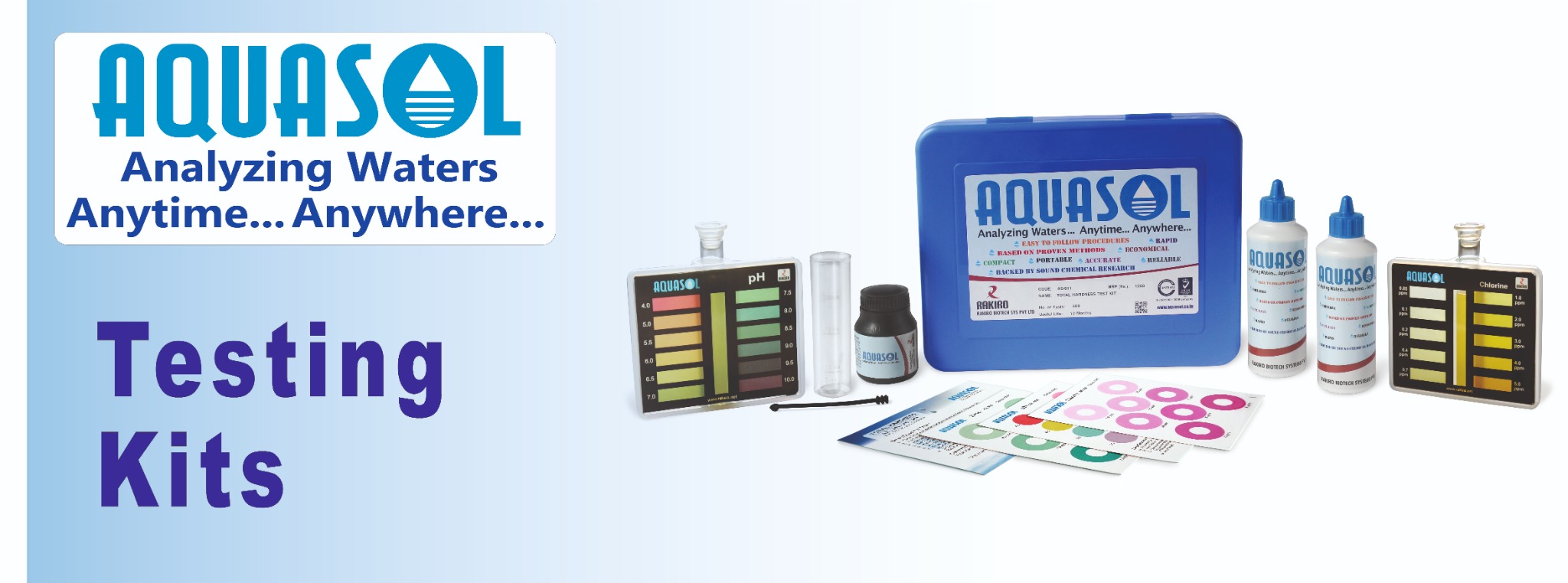
Choose the testing format that fits your field work.
From multi-parameter combination cases to individual test kits and rapid indicator papers, Aquasol provides practical options for routine water-quality monitoring.
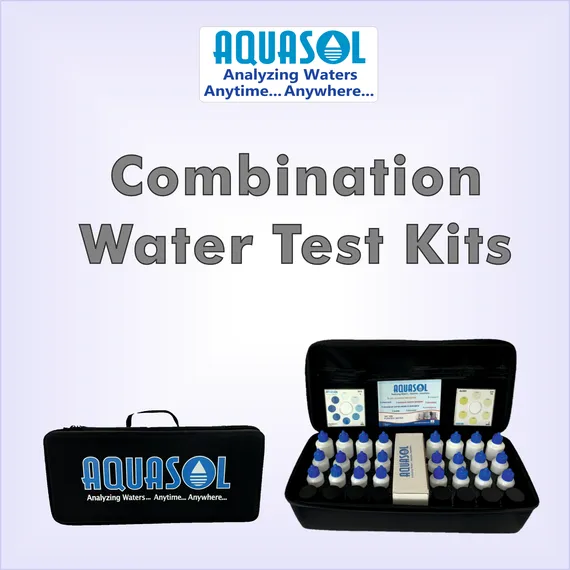
Combination Water Test Kits
Portable multi-parameter kits assembled for complete field assessment of drinking water, boiler water, cooling water, RO systems, aquaculture, swimming pools, construction water, soil and specialised process applications.
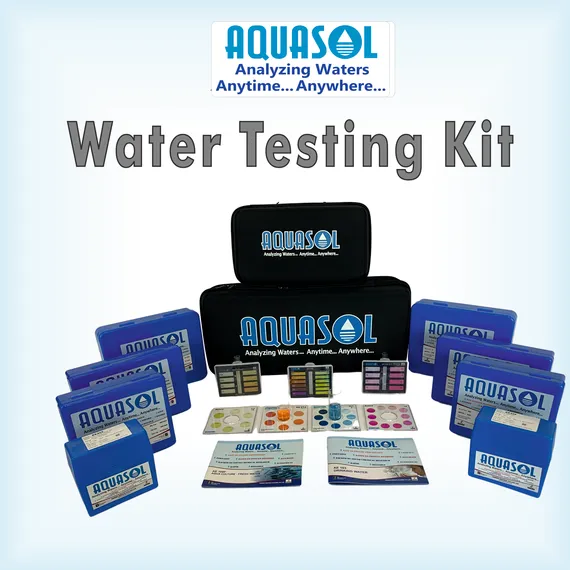
Individual Water Test Kits
Parameter-specific field test kits for hardness, alkalinity, chloride, chlorine, sulphite, nitrite, phosphate, silica, iron, fluoride and many other chemical water-quality measurements.
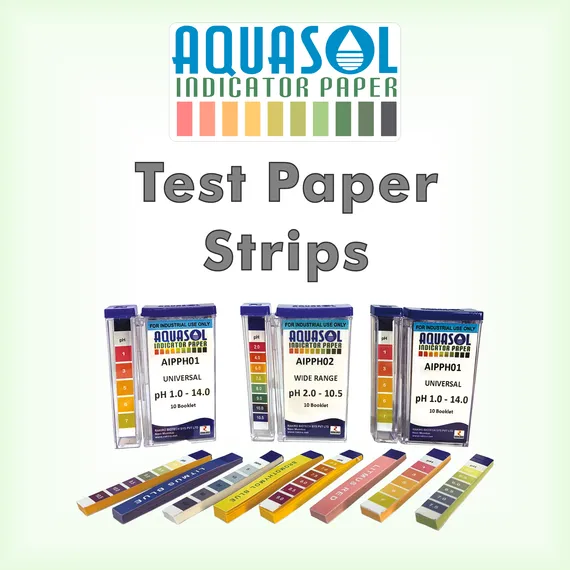
Indicator Papers & Test Strips
Fast visual test papers and strips for pH and selected chemical parameters where simple, portable and immediate screening is required.
Turn water-quality measurements into faster operating decisions.
Water conditions can change with source quality, treatment dosage, seasonal variation, production load and recirculation. Regular field testing gives operators an immediate view of important parameters before small deviations become costly operational problems.
Protect industrial utilities
Boilers, cooling towers and RO plants depend on controlled hardness, alkalinity, chloride, silica, sulphite, phosphate, pH and disinfectant residuals. Routine testing supports treatment verification and helps identify scale or corrosion risk.
Verify drinking and process water
Portable kits help screen water at the source, treatment unit, storage tank and point of use. Results can guide immediate corrective action and indicate when laboratory confirmation is needed.
Support aquaculture and agriculture
Monitoring pH, ammonia, nitrite, nitrate, dissolved oxygen and soil nutrients helps users respond more quickly to conditions that affect fish health, crop performance and nutrient management.
Improve treatment control
Testing before and after chemical dosing provides practical feedback on treatment performance and helps prevent both under-dosing and unnecessary chemical consumption.
Reduce response time
Field kits provide results close to the sampling point, allowing plant teams to investigate abnormal trends without waiting for routine external laboratory reports.
Create useful operating records
Consistent sampling, testing and recording establish trends that support maintenance planning, troubleshooting and communication between operators, laboratories and management.
Different formats for different monitoring needs.
The correct format depends on the number of parameters, expected concentration, required speed and skill level of the user.
Combination test kits
Designed for applications where several parameters must be checked together. The portable carry-case format keeps reagents, comparators and instructions organised for routine site work.
- Application-specific parameter selection
- Convenient for plant rounds and field surveys
- Suitable for boiler, cooling, drinking, RO, pool, aquaculture and construction water
Individual test kits and papers
Ideal when one parameter requires frequent monitoring or when a simple screening result is sufficient. Choose the range that places the expected value within the useful middle portion of the test scale.
- Parameter-focused and economical
- Useful for treatment residual checks
- Rapid pH and selected chemical screening with papers and strips
Popular kits for routine monitoring.
Open any product page for applications, features, ranges, documents, videos and direct links to the current Rakiro catalogue.
 AE103 · Combination Water Test Kits
Drinking Water Combination Test Kit
Drinking water is supposed to be safe for consumption by humans and animals. Water may be naturally safe or it may need to be treated in order to be safe. Water which is not safe to drink can carry diseases and
 AE102 · Combination Water Test Kits
Boiler Water Combination Test Kit
Boilers are systems which generate steam which consists of two principal parts: the furnace which provides heat usually by burning a fuel and the Boiler proper a device in which the heat changes water into stea
 AE201 · Individual Water Test Kits
Total Hardness Test Kit (250 Test)
When water passes through or over deposits such as limestone the levels of Calcium and magnesium ions present in the water greatly increase and cause the water to be classified as hard water. Hardness in water
 AE205 · Individual Water Test Kits
Free Chlorine Test Kit
Chlorine is the most widely used oxidizing biocide today for disinfection of domestic water supplies as also for the removal of tastes and odours from water. The amount of chlorine required to be added in a wat
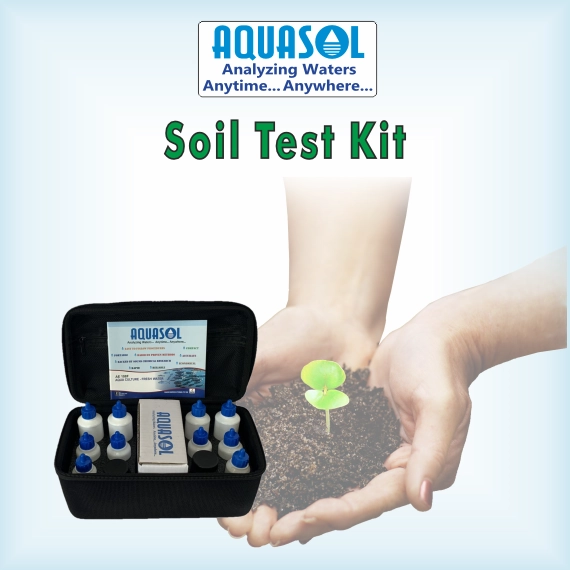 AE110 · Combination Water Test Kits
Soil Test Kit
Soil testing is the analysis of a soil sample to determine nutrient and contaminated content composition and other major nutrient characteristics. A soil test can determine fertility or the expected growth pote
 AIPPH01 · Indicator Papers & Test Strips
PH Test Paper
PH Indicator Paper Universal pH 1.0 to 14.0 have been developed with a mixture of several indicators which on contact with the sample solution assume a particular color. A check against the color comparison tab
Good results depend on more than the reagent.
Representative sampling, clean apparatus, correct timing and accurate interpretation are essential for repeatable results.
1. Select the sampling point
Collect water from a location that represents the process condition being evaluated. Flush stagnant lines where appropriate and avoid contamination from dirty containers.
2. Choose the correct range
Use a test range that covers the expected concentration without sacrificing useful resolution around the operating target or control limit.
3. Follow the sequence
Measure the sample volume carefully, add reagents in the stated order and observe reaction time, mixing and endpoint instructions.
4. Read consistently
Use suitable lighting, compare colours promptly and apply the specified calculation factor for titration-based methods.
5. Record and trend
Log the result with date, time, sampling point and operator name. Trends are often more useful than a single isolated measurement.
6. Confirm critical results
Unexpected, regulatory or high-consequence results should be checked using the approved laboratory method and a fresh representative sample.
Match the kit to the parameter, range and application.
Good field testing starts with the right sampling point, suitable test range, correct procedure and proper interpretation. Aquasol application guides help users select and use kits more effectively.